
IEC URGES MEDIA TO PRIORITISE ACCURACY AS 2026 LOCAL ELECTIONS APPROACH
The Idependent Electoral Commission of South Africa (IEC) has urged journalists to prioritise accuracy, verification and accountability when reporting on the upcoming 2026 Local Government Elections, warning that pressure to publish quickly can fuel misinformation.
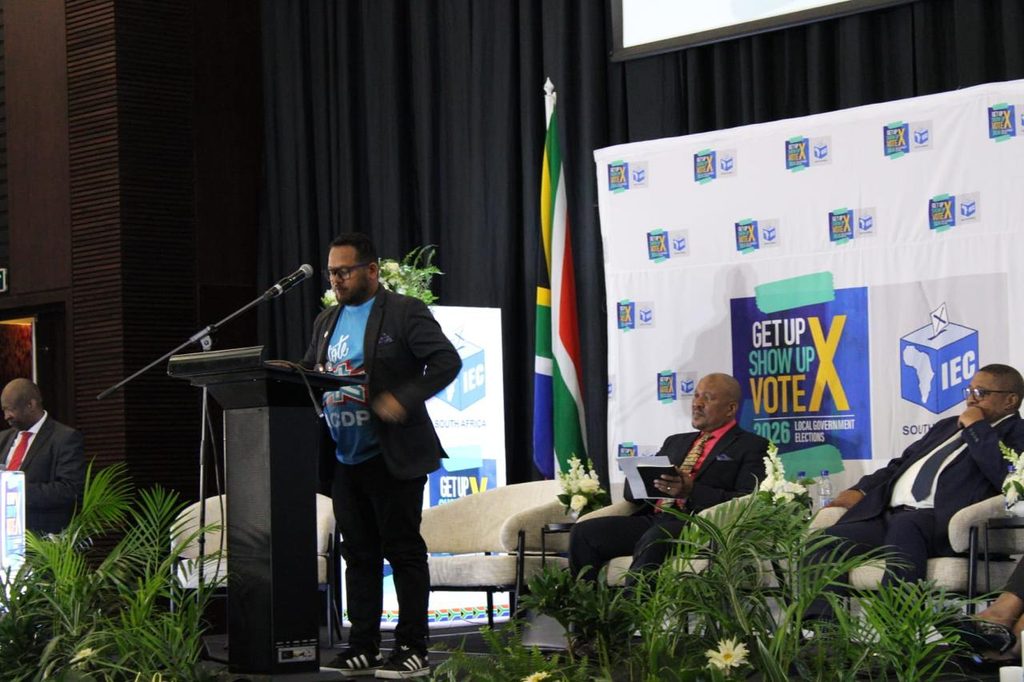
The call was made during an IEC media engagement in the Eastern Cape, where officials briefed journalists on election preparations, the role of the media in electoral democracy, voter education, misinformation and reporting from voting stations.
The 2026 Local Government Elections are scheduled for 4 November. David Mandha from the IEC’s national office said journalists have a responsibility to provide the public with reliable information and should not allow the pressure to be first with a story to compromise verification.
He emphasised the importance of verification, context, evidence and accountability, particularly in an environment where artificial intelligence and social media can accelerate the spread of inaccurate information.
“Let’s not try to be the first to break the story. Let’s verify and then we move with the story,” Mandha said.
Mandha said the media’s responsibility during elections extends beyond reporting on the IEC. Journalists should also scrutinise the electoral process and ensure voters receive information that helps them make informed decisions.
“Your role is not only to praise the commission. Your role is also to report on the work that we are doing, but also keep your eyes where you have to, both sides,” he said.
According to the presentation, the media has several responsibilities during elections, including educating voters on how to exercise their democratic rights, reporting on campaigns, providing parties and candidates with platforms to communicate with voters, giving the public an opportunity to raise concerns, facilitating debate, reporting results and monitoring vote counting.
Mandha said the focus should now shift from voter registration to ballot education.
“We are no longer registering voters. We’re now moved to ballot education,” he said.
The presentation also showed uneven media coverage during the 2024 National and Provincial Elections. The Eastern Cape accounted for 6% of monitored election coverage, compared with 23% in Gauteng and 14% in KwaZulu-Natal.
Mandha also presented figures on IEC engagement with the media, indicating that 700 journalists had been trained, 18 media briefings held, more than 386 interviews conducted and 47 media statements and advisories issued. The IEC also reported 16 media roadshows and 47 stakeholder engagements.
Community radio was identified as an important platform for voter education, with 148 community radio stations carrying 30-minute election interviews across all nine provinces.
On misinformation and artificial intelligence, A. Mbambo said electoral role players must take responsibility for the information they create and share.
She explained that the regulatory framework seeks to protect electoral and democratic integrity while maintaining freedom of expression.
“It’s keeping a balance between your freedom of expression and democratic integrity,” Mbambo said.
She warned that AI-generated content must be clearly identified so the public is not misled.
“If you wish to share something that has been AI generated, there needs to be a watermark that is indicating that this content is AI generated,” she said.
Mbambo encouraged electoral stakeholders to verify information before sharing, correct false information and reject harmful campaigns even when they may benefit from them.
The briefing also addressed reporting from voting stations. Mandha said media access is determined by the Presiding Officer, who may also determine the number of media representatives allowed inside at a time.
Journalists may not conduct interviews inside voting-station boundaries without the Presiding Officer’s permission. Political activity is prohibited within those boundaries, and journalists may not wear political clothing or paraphernalia inside.
Voting hours will run from 07h00 to 21h00. Once voting stations have closed and counting has begun, media coverage will not be permitted inside.
Mandha provided a verification checklist for journalists before publishing election-related information. He encouraged journalists to consider the source and evidence, seek independent confirmation, check metadata, conduct reverse-image searches where necessary and seek confirmation from the IEC.
Eastern Cape readiness was also addressed by provincial manager Maki, who outlined preparations involving voters, voting stations, personnel and infrastructure.
Maki encouraged stakeholders to focus on young voters and to encourage them not only to register but also to vote.
“So if we say that young people are nonchalant, pathetic, yeah, maybe we’ve got to really look at that,” Maki said.
He also discussed mobile voting stations used in areas where geography or low population density makes access to conventional stations difficult. He urged journalists to confirm whether a station is mobile and establish its operating times before travelling.
Maki rejected claims that most election officials are teachers, describing the claim as disinformation and explaining that the IEC considers experience, training and suitability when recruiting.
“That is disinformation,” Maki said.
He said the IEC is placing emphasis on experienced personnel and training to strengthen operations on election day.
The national candidate picture highlighted the scale of the 2026 elections. The IEC presentation showed 136,790 candidates qualified to contest 10,526 council seats across eight metropolitan municipalities, 44 district municipalities and 205 local municipalities.
Of the qualified candidates, 85,263, or 62%, are male, while 51,527, or 38%, are female. A total of 32% of qualified candidates are aged between 18 and 39, placing them within the youth category.
The media engagement concluded with a vote of thanks and closing remarks from J. Stanworth.
The briefing reinforced the importance of cooperation between the IEC and the media as the country moves closer to the 2026 Local Government Elections.